


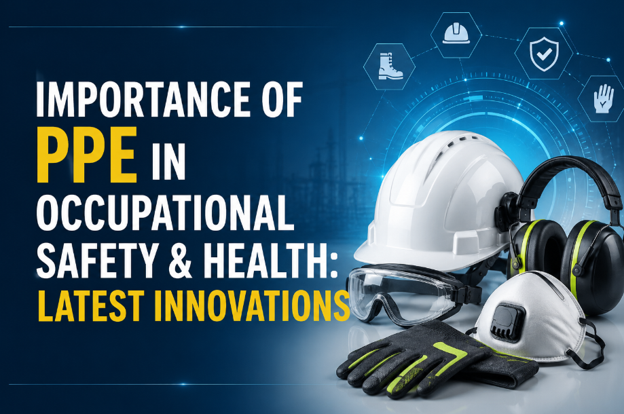
Importance of PPE in Occupational Safety & Health: Latest Innovation
Quick Answer
PPE in Occupational Safety is used to protect workers against physical, chemical, and biological hazards in hazardous workplaces. In India, PPE is now a legal requirement under the OSHWC Code and BIS standards. Innovations such as smart IoT-enabled safety gear, ergonomic PPE design, AI-powered compliance monitoring, and sustainable reusable equipment are changing how industries approach worker safety and compliance in 2025.
What Is PPE in Occupational Safety and Health? Why Is It Important Now?
PPE in Occupational Safety and Health refers to certified protective equipment used to minimize worker exposure to workplace hazards when engineering or administrative controls are not enough.
This includes:
- Safety helmets
- Gloves
- Respirators
- Safety shoes
- High-visibility vests
- Eye and face protection
Today, personal protective equipment in India is no longer optional. The Occupational Safety, Health and Working Conditions (OSHWC) Code mandates employers to provide certified PPE for all hazardous operations.
Failure to comply can result in:
- Penalties up to ₹200,000
- Imprisonment for repeat offenses
The Bureau of Indian Standards (BIS) sets the mandatory quality benchmark for PPE products in India. BIS certification is the first proof of compliance during audits and inspections.
However, compliance alone does not guarantee protection.
Across manufacturing, construction, logistics, oil & gas, and chemical sectors, one major issue continues to exist: PPE may be available on paper but is often not consistently worn by workers.
That gap is exactly what the latest PPE innovations are designed to solve.
The Compliance Gap: Why Workers Don’t Use Their PPE
Understanding worker non-compliance is the first step toward solving it.
Research shows:
- Over 78% of workers cite discomfort as the primary reason for avoiding PPE
- Nearly 70% say poor fit prevents consistent usage
- Non-compliance is often a design problem, not worker defiance
The reality is simple:
PPE that is uncomfortable will not be worn.
PPE that is not worn provides zero protection.
This is why the future of PPE importance in the workplace is now focused heavily on usability, comfort, and intelligent monitoring.
5 PPE Innovations Transforming Occupational Safety & Health in India
1. Smart PPE with IoT Sensors
Modern helmets, safety vests, and wearable wristbands are now equipped with:
- Real-time environmental hazard monitoring
- Fall detection systems
- Location tracking
- Exposure monitoring sensors
When danger thresholds are crossed, alerts are instantly sent to EHS teams.
This transforms PPE from passive protection into an active workplace safety intelligence system.
Practical Implication
For EHS managers, smart PPE provides:
- Auditable compliance records
- Real-time worker visibility
- High-risk zone mapping
- Faster emergency response
This is rapidly becoming one of the most important advancements in PPE in Occupational Safety & Health.
2. Ergonomic and Comfort-Oriented PPE Design
Ergonomics is now a core engineering priority in PPE development.
New-generation PPE includes:
- Lightweight flame-resistant garments
- Pressure-distributing respirator straps
- Anti-fatigue precision-grip gloves
- Women-specific PPE designs for improved fit and safety
India is also seeing increased adoption of inclusive PPE designed specifically for diverse workforce requirements.
Practical Implication
Organizations that involve workers in PPE trials before procurement often see significantly higher compliance rates.
Comfort improves adoption.
Adoption improves protection.
3. High-Tech Fabrics and Advanced Material Innovation
Material science is rapidly improving safety gear in India.
Key innovations include:
Nanofiber Respirators
These provide:
- Better particulate filtration
- Lower breathing resistance
- Improved long-duration comfort
Advanced Flame-Resistant Fabrics
Modern FR fabrics offer:
- Greater thermal protection
- Better flexibility
- Reduced garment weight
These are especially critical for:
- Oil & gas
- Chemical processing
- Heavy manufacturing
High-Performance Cut-Resistant Fibers
Workers performing precision tasks now get:
- Enhanced dexterity
- Improved grip
- Higher cut resistance without compromising mobility
Practical Implication
If PPE specifications are over three years old, they may already be outdated.
EHS teams should review PPE procurement specifications annually to stay aligned with current safety standards and innovations.
4. AI-Based PPE Compliance Monitoring
AI and computer vision systems are now being deployed to monitor PPE compliance automatically.
These systems can:
- Detect whether workers are wearing required PPE
- Identify missing helmets, gloves, or vests
- Generate automated compliance records
- Flag violations in real time
Predictive analytics platforms also combine:
- Wearable data
- Incident reports
- Environmental sensor inputs to identify safety risks before incidents occur
Practical Implication
AI monitoring reduces manual supervision pressure on safety officers and allows EHS teams to focus more on preventive risk management.
This innovation is redefining PPE importance in workplace safety programs across India.
5. Reusable and Sustainable PPE
Sustainability is becoming a major focus area in occupational safety.
Examples of reusable PPE include:
- Modular respiratory systems
- Washable FR garments
- Durable safety footwear with replaceable components
These solutions reduce:
- Single-use waste
- Long-term procurement costs
- Environmental impact
Practical Implication
Organizations should evaluate PPE using total cost of ownership instead of just unit price.
Reusable PPE often becomes more cost-effective within 6–12 months.
India’s PPE Regulatory Framework: What EHS Teams Must Know
OSHWC Code Requirements
The OSHWC Code requires:
- Certified PPE for hazardous operations
- Employer accountability for PPE compliance
- Documentation and proof during inspections
Consequences of non-compliance
- Penalties up to ₹200,000
- Imprisonment for repeat violations
BIS Certification Requirements
All PPE products used in India must comply with Bureau of Indian Standards certification requirements.
This includes:
- Helmets
- Gloves
- Respiratory protection
- Safety footwear
- Protective clothing
Any non-BIS-certified PPE may automatically fail regulatory inspection standards.
Factories Act Compliance
Certain industries notified under the Factories Act have mandatory PPE requirements tied to specific operational hazards.
Failure to comply can lead to prosecution of both:
- Employers
- Safety officers
Today, PPE auditing is no longer an annual exercise. Under modern industrial regulations, it has become a continuous operational responsibility.
Frequently Asked Questions
What does PPE mean in occupational safety?
PPE in occupational safety & Health stands for Personal Protective Equipment. It includes certified protective equipment such as helmets, gloves, respirators, safety footwear, eye protection, and high-visibility clothing used to protect workers from workplace hazards.
Is PPE mandatory for industrial workers in India?
Yes. The OSHWC Code mandates the use of certified PPE for hazardous industrial operations in India. Non-compliance can lead to penalties up to ₹200,000 and imprisonment for repeat offenders.
What are the latest PPE innovations in 2025?
Major innovations include:
- Smart IoT-enabled PPE
- Ergonomic PPE design
- Nanofiber respirators
- AI-based compliance monitoring
- Sustainable reusable PPE systems
Why do workers avoid wearing PPE?
Research shows:
- Over 78% cite discomfort
- Nearly 70% report poor fit issues
Improved ergonomic PPE and worker-tested equipment significantly increase compliance rates.
What is BIS certification for PPE in India?
BIS certification from the Bureau of Indian Standards is the mandatory quality standard for PPE products in India and serves as the primary proof of compliance during safety inspections.
See These Innovations in Action at OSH India Expo 2026
Since 2012, Informa Markets India has organized the OSH India Expo 2026 — South Asia’s largest occupational safety and health exhibition.
The 14th edition will take place at the Bombay Exhibition Centre from 7–9 October 2026.
The event brings together:
- Global PPE manufacturers
- Occupational safety & health technology providers
- Regulatory authorities
- 7,000+ industry professionals
Attendees can explore:
- Live PPE demonstrations
- Smart safety technologies
- Expert-led EHS conferences
- Verified B2B supplier networks
For EHS managers, safety officers, and procurement teams, it is one of the most important platforms to evaluate the future of personal protective equipment in India.
Key Takeaways
- PPE in occupational safety is now a legal requirement in India under the OSHWC Code and BIS standards.
- Worker discomfort and poor fit remain the biggest barriers to PPE compliance.
- Innovations such as smart PPE, ergonomic design, AI monitoring, advanced fabrics, and reusable systems are transforming workplace protection.
- Organizations should review PPE specifications annually and prioritize worker-tested ergonomic solutions.
- Total cost of ownership matters more than unit cost when evaluating sustainable PPE systems.
- OSH India Expo 2026 will be a key platform for discovering the latest in occupational safety and PPE innovations in India.