


Human Factors and their Role in Enhancing Productivity
Reducing error and influencing behaviour (HSG48) is the key document in understanding HSE's approach to human factors. It gives a simple introduction to generic industry guidance on human factors, which it defines as:
"Human factors refer to environmental, organisational and job factors, and human and individual characteristics, which influence behaviour at work in a way which can affect health and safety"
OSH India Expo now has a ten-year legacy of enriching Indian industry with HSE knowledge and spreading awareness through quality safety and occupational health product demos, and industry-leading conference sessions since the inception of its first edition in 2012.
This definition includes three interrelated aspects that must be considered: the job, the individual and the organisation:
- The job: including areas such as the nature of the task, workload, the working environment, the design of displays and controls, and the role of procedures. Tasks should be designed in accordance with ergonomic principles to take account of both human limitations and strengths. This includes matching the job to the physical and the mental strengths and limitations of people. Mental aspects would include perceptual, attentional and decision making requirements.
- The individual: including his/her competence, skills, personality, attitude, and risk perception. Individual characteristics influence behaviour in complex ways. Some characteristics such as personality are fixed; others such as skills and attitudes may be changed or enhanced.
- The organisation: including work patterns, the culture of the workplace, resources, communications, leadership and so on. Such factors are often overlooked during the design of jobs but have a significant influence on individual and group behaviour.
In other words, human factors is concerned with what people are being asked to do (the task and its characteristics), who is doing it (the individual and their competence) and where they are working (the organisation and its attributes), all of which are influenced by the wider societal concern, both local and national.
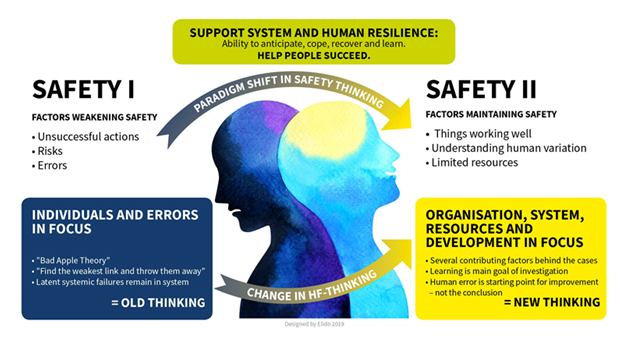
Human factors interventions will not be effective if they consider these aspects in isolation. The scope of what we mean by human factors includes organisational systems and is considerably broader than traditional views of human factors/ergonomics. Human factors can, and should, be included within a good safety management system and so can be examined in a similar way to any other risk control system.
Human Factors: The Business Benefits
If you think safety's expensive, try having an accident